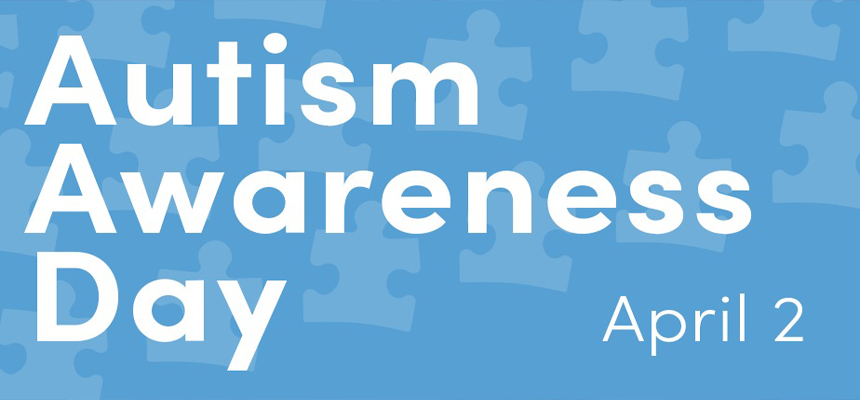
World Autism Awareness Day 2nd April 2020
Dr. Maruthi Prasad Upputuri, Consultant Pediatrician, KIMS ICON Hospital, Vizag
What is autism spectrum disorder?
Autism spectrum disorder is a brain disorder that impairs a person's behavior and ability to communicate and interact with others. Autism spectrum disorder can be mild or severe. No one knows what causes it.
What are the key symptoms of autism spectrum disorder?
To be diagnosed with autism spectrum disorder, a child must show signs of the disorder in early childhood. Sometimes the symptoms do not show up until the child is in school. The signs of autism spectrum disorder include problems in 2 key areas:
Social interaction and social communication – Children with autism spectrum disorder have trouble relating to others. They often don't know how to read facial expressions, and they tend to avoid eye contact. Plus, they often dislike being touched. Many young children with autism spectrum disorder prefer not to play or interact with others.
Children with autism spectrum disorder often take much longer than other children to learn to speak. Some never learn to speak. But speech is not the only thing that's affected. The parents of children with autism spectrum disorder sometimes think the children are deaf. But deaf children who cannot speak look for other ways to communicate, such as through hand motions. Children with autism spectrum disorder do not. They do not seem to care whether they can communicate.
Limited interests – Children with autism spectrum disorder tend to show intense interest in certain things. But they show little interest in anything else. Young children might get completely focused on things that spin or shine and ignore most everything else. Older children might become preoccupied with 1 topic, such as the weather, numbers, or sports. Children with autism spectrum disorder also tend to have rituals that they must follow exactly. For example, they might need to eat particular foods in a specific order, or to take the same route from one place to another – every time. If these habits get disrupted, the child gets upset.
When should I take my child to a doctor?
Take your child to a doctor or nurse if you see any of the signs of autism spectrum disorder listed above or in the table. You might also want to have your child's hearing tested. That way you can find out whether hearing problems are causing some of the symptoms you see.
If the doctor or nurse suspects autism spectrum disorder, he or she will probably send you to see a team of experts who know how to spot the disorder. The members of this team will:
Ask you lots of questions about your child and your family
Test your child's abilities in lots of ways
Make sure that the child's symptoms are not caused by another problem
If your child does have autism spectrum disorder, it's important that he or she be diagnosed as soon as possible. Some of the problems caused by autism spectrum disorder can be improved if they are caught early.
How is ASD diagnosed?
The history is usually obtained from the parents; teachers and therapists also can provide useful information. It focuses on early and current ASD symptoms; common associated conditions; family history of ASD, conditions associated with ASD, comorbid ASD, or conditions that share symptoms with ASD; and psychosocial history.
The physical examination is focused on consequences of restricted, repetitive dietary patterns and signs of associated conditions (eg, weight, head circumference, neurocutaneous findings, dysmorphic features, focal or asymmetric neurologic findings, abnormal neurodevelopmental findings).
Diagnostic tools are used in conjunction with the history and examination to make a diagnosis of ASD; they should not be used in isolation. Diagnostic tools for ASD generally are administered by a specialist.
Ancillary testing is necessary to assess functional impairment, define the child's strengths and weaknesses for education planning, identify associated conditions (eg, intellectual impairment [formerly referred to as mental retardation], language impairment), and evaluate conditions with symptoms that mimic ASD.
How is autism treated?
The right treatment for autism spectrum disorder depends on the age of the child, how severe the disorder is, and whether the child has any other medical problems. Autism spectrum disorder cannot be cured, but children are often able to overcome many of the problems it causes. Management must be individualised based on the severity of impairment.
The overarching goals of treatment are to maximize functioning, move the child toward independence, and improve the quality of life. Specific goals are to improve core symptoms and adaptive skills, decrease negative behaviors, and promote academic functioning and cognition.
Interventional models for treatment may include a variety of techniques. Behavioral-based interventions and developmental models have support for efficacy, especially when provided early and intensively. However, it is important to monitor response to interventions and have clearly targeted symptoms.
The addition of parent-mediated interventions to other types of intervention may help families interact with their child, promote development, and increase parental satisfaction, empowerment, and mental health. However, which parental interventions maximize outcomes is unknown. In addition to providing direct interventions, general parental involvement in the treatment program is essential and should include parent training and collaboration.
Children with ASD benefit most from language interventions that span settings and are incorporated into their daily routines. There is insufficient evidence to support a specific methodology (eg, traditional speech and language interventions, behaviourally based strategies, augmentative communication strategies, visual support), and a variety of methods may be used.
Interventions that address social skills deficits include interventions that address joint attention, modelling, peer training, and story-based interventions.
Traditional occupational therapy is often used to address deficits in adaptive functioning and fine motor skills.
Some of the strategies that are used to address the deficits in autism in preschool children may not be appropriate for toddlers or children with significant cognitive impairment, but early intensive therapy is recommended.
Programs for older children and adolescents should focus on achieving social competence, emotional and behavioral regulation, and the functional adaptive and vocational skills necessary for independence. They should continue to include the core attributes of successful programs, including a plan for transition to adulthood.
 Disclaimer: Welthi.com does not guarantee any specific results as a result of the procedures mentioned here, and the results may vary from person to person.