ARE HIGH HEELS RAISING YOUR CHANCES OF LONG-TERM INJURY?
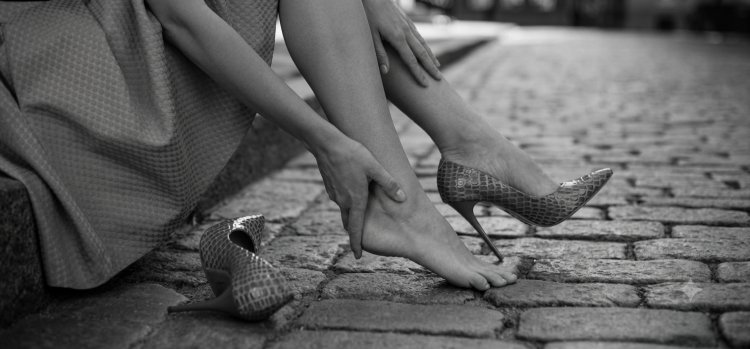
Yes Ladies, we hear you! We know they look good on you, and we empathize. But consider the damage and rethink your choice of footwear. In fact, consult an expert if you feel like your footwear is placing you at risk.
You might have been told that women who wear high heels frequently suffer damage to their ankles, legs, and backs. Studies conducted on the subject have found that while wearing high heels initially strengthens a woman’s ankle muscles, they eventually lead to instability and weakness of those same muscles. This is because initially when wearing heels, the muscles that surround the ankles have to contract to keep you upright and walking. However, over time, you will need less muscle contraction as the lower leg muscles adapt to the changes in the footwear. Once that occurs, less muscle contraction takes place. It has also been found that ankle damage associated with high heels is caused by forcing the foot into a naturally unstable position. With prolonged use of high heels, the ligament and nerve damage in the ankles leads to complications in the legs and back. With flat shoes, on the other hand, the bones of the ankle are below the bones of the lower leg, creating stability.
Studies have proved that wearing high heels, particularly stilettos, can lead to at least a dozen injuries from a woman’s toes to her lower back. These include shortened calves, muscle fatigue, osteoarthritis, and altered posture. With prolonged use of high heels, you get muscle shortening in the back of the leg, and muscle lengthening in the front of the leg. These changes in muscle length can affect and alter the muscle strength. High heeled shoes also affect the normal walking gait and cause the muscles higher in the leg and back to lose efficiency and strength. It also changes the load that the bones in and around the knees have to absorb, which can ultimately lead to injury.
Some tips to reduce your risk of foot injury from high heels:
Choose an appropriate heel of moderate height and width. Ensure that the toe box of the shoe has adequate space for your toes to move.
Improve your core strength, as a strong core provides additional strength in your lower extremities that will help with balance.
Choose shoes appropriate for the terrain. If you are on grass, cobblestones or any uneven surface, a lower heel will keep your ankles stable.
Change your shoes during the day. Have a pair of flat-heeled shoes on standby, which you can wear when your feet begin to feel the negative effects of high heels. This will provide your ankles and toes some much-needed respite.
Wear the right sized shoes, as wearing shoes that are either too small or too large incurs the risk of hurting your feet. Neither your toes nor your heels should be off the ends of your shoes.
Always seek immediate medical attention if you have problems associated with the shoes you are wearing.
 Disclaimer: Welthi.com does not guarantee any specific results as a result of the procedures mentioned here, and the results may vary from person to person.